Writing
The Clock that Steers the Pen
Just a minute – the phrase generations of us grew up with in our daily lives – was such a cliché to me until I chose to take a college screenwriting course. On day one in the class, I learned of the relation between the minute and a screenwriter’s pen (old school here so feel free to replace with keyboard/keypad). That one page of a script roughly translates into one minute of screen time struck me as simple yet fascinating. The standard screenplay length for a feature film – which is 90 to 120 minutes – by this measure comes to about the same number of pages in the screenplay.
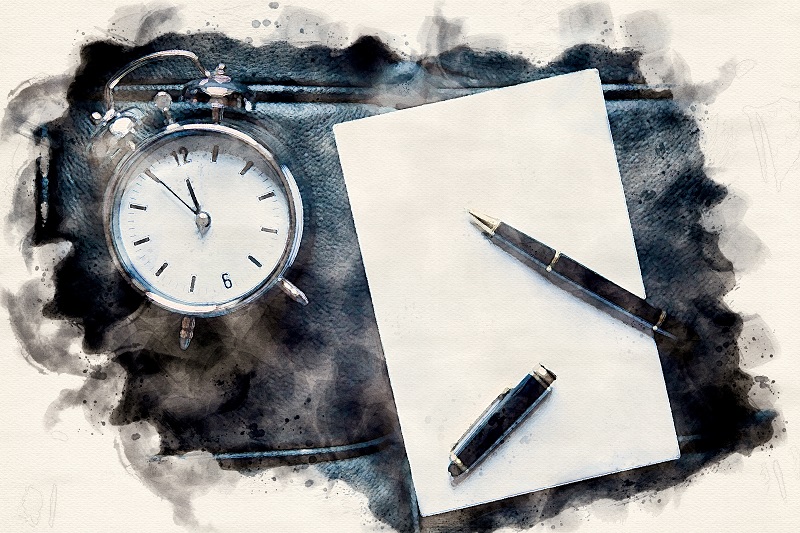
Now as I would learn by my experience and the critique of others, this One Page One Minute rule is not carved in stone. Depending on the exact content of the script, the proportion of dialogue to action, and other things, it can vary to various degrees. But the calibration of the writer’s pen with the length of what happens on the screen redefined the natural pace of writing for me. To take liberty with the idiom, it made my storytelling tick.
Since we – the penholders – naturally tend to go by our words instead of the clock, the words-to-minutes equation also brought with it an unseen conflict. Unless I made my own movie, the screen time the filmmaker(s) decided for their production would dictate how much I could write. It’s not the pages I create but the minutes they decide for the movie that take precedence in the project. Sounds like subordination of my pen to their clock, right?
The answer is both yes and no. The yes part is obvious and justifiably so, at least for those of us who are somewhat familiar with the time-bound rules at film festivals and with distributors. There usually is a range of length, say 45 to 60 minutes of a movie, which gives the writer a fair degree of freedom to develop the plot. And most festivals and many streaming platforms these days are open to both short and feature length movies so no reason to panic as such.
However, the time rules may be strict in some cases and given the fact that the opening and closing credits count in the total running time of a movie, the pen can be steered rather tightly by the hands of the clock. For the screenwriter, this challenge offers an opportunity – get creative to the last tick. The ability to tell your story in as few or as much words as asked for isn’t necessarily subordination; it’s a test of your competence as a screenwriter.
So ask yourself: are you up to the challenge? Or do you set your own rules and keep the pen above the clock? The good news is it’s a win-win. Either choice is valid long as your writing spirit is onboard.