Health
When Getting to the Lab Feels Like Too Much
by Daniel Buitrago
There is a particular kind of tiredness that does not show up on any chart. It is the tiredness of managing your own health when you are already depleted — the mental weight of remembering the appointment, arranging the ride, sitting in a fluorescent waiting room, and holding yourself together long enough to get home again. For anyone moving through recovery, whether from illness, surgery, addiction, a mental health crisis, or simply a long hard season, that weight is real. And it often lands hardest on the small, routine things that are supposed to keep us well.
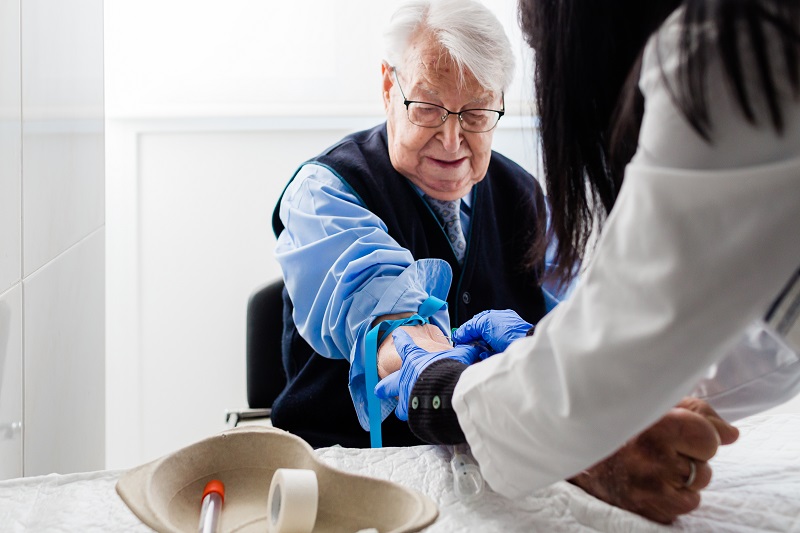
Bloodwork is one of those things. It sounds minor — a quick draw, in and out — but for a lot of people it is the appointment that quietly slips. Maybe the medication you are on requires regular monitoring. Maybe your doctor wants to track a thyroid level, a vitamin deficiency, an inflammation marker, or how your liver is handling a new prescription. The test itself takes five minutes. Getting to it can take everything you have.
Why the small stuff gets skipped
When you are running low, your brain triages. It protects the essentials and lets the rest fall away. Preventive and monitoring care — the bloodwork, the follow-up panel, the “let’s just keep an eye on that” test — tends to be exactly what gets deprioritized, because skipping it once rarely has an immediate consequence. The trouble is that these tests exist precisely to catch the things that do not announce themselves. A medication level drifting out of range, a nutrient quietly bottoming out, a number trending the wrong way — these are easier to manage early than late.
There is also an emotional layer that does not get talked about enough. For someone recovering from a health scare, a lab visit can carry dread — the waiting, the not-knowing, the association with a frightening time. For someone managing anxiety, the logistics alone (parking, crowds, a stranger with a needle, the fear of fainting) can be enough to put it off indefinitely. For someone with limited mobility or no easy transportation, it may not be procrastination at all. It may simply be that the system was not built for the body they are living in right now.
Making monitoring fit your life, not the other way around
One shift that helps is to stop treating health monitoring as something you must travel toward, and start asking what can come to you. Telehealth opened that door for a lot of people during the last few years — you can now have a real conversation with a clinician from your couch. But labs were often the missing piece. Your doctor could see you on a screen and order the test, and then you were back to square one: get yourself to a building to actually do it.
That gap is closing. Mobile phlebotomy services that send a certified professional to your home mean the blood draw can happen at your kitchen table, on your schedule, without the trip. A trained phlebotomist arrives, performs the draw, and delivers the specimen to the lab — and you never have to leave the place where you feel safest. For someone whose recovery depends on conserving energy and reducing stress, removing the entire logistics chain around a routine test is not a luxury. It can be the difference between staying on top of your care and falling behind on it.
Small systems that protect your progress
Whatever route you take, a few habits make ongoing monitoring far less likely to slip:
Keep one running list. A single note on your phone with every test your providers have ordered, when it is due, and whether it is done. When your energy is low, you should not also have to remember.
Pair it with something you already do. Tie the blood draw to a refill, a regular telehealth check-in, or the first week of the month — an anchor that already exists in your routine so it is not one more thing to initiate from scratch.
Lower the barrier, not the standard. If clinic visits are the obstacle, change the visit — not the care. An at-home draw, a ride from someone you trust, or a clinic closer to home all keep the monitoring intact while removing the friction.
Tell someone. A partner, friend, or care coordinator who knows what is on your list can gently remind you — and, on the hard days, help you arrange it.
Recovery includes the boring parts.
We tend to picture healing as the big, visible work — therapy, rest, hard conversations, new routines. It is all of that. But it is also the unglamorous maintenance: the refills, the follow-ups, the bloodwork that confirms you are moving in the right direction. Those quiet tasks are not separate from your recovery. They are part of how you stay standing long enough for the bigger work to take hold.
So if there is a test you have been putting off — not out of carelessness, but because getting there felt like more than you had to give — it is worth knowing the landscape has changed. The care you need is increasingly willing to meet you where you are. And on the days when leaving the house is the mountain, that can be exactly the help that keeps your healing on track.
About the Author
Daniel Buitrago is the founder of Speedy Sticks, a national mobile phlebotomy and specimen-collection company that brings certified phlebotomists to patients in their own homes. He writes about expanding access to everyday healthcare and removing the everyday barriers that keep people from the care they need.