Psychology
How A Belief Quietly Proves Itself Right
by Live The Life Of Your Dreams
Think of something you believe about yourself that you would rather not believe.
Maybe it is “I’m bad with money.” Maybe it is “people always leave.” Maybe it is “I always quit.” You don’t walk around saying it out loud. But it sits there underneath your choices, quietly arranging your days so that it keeps coming true.
That is not a mystical curse and it is not a character flaw. It is one of the most well-documented patterns in psychology, and it has a name: the self-fulfilling prophecy. Once you can see the loop clearly, you can step out of it. Not by force. By understanding exactly where the levers are.
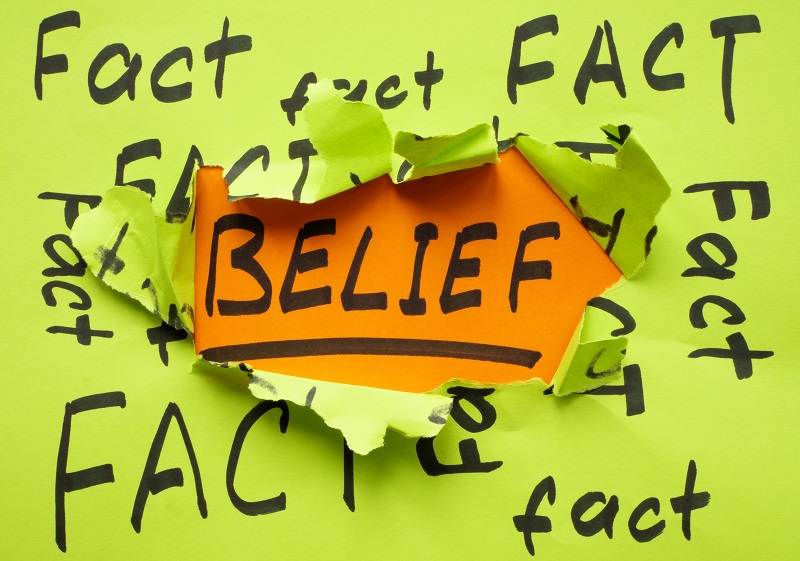
Where the idea comes from
Sociologist Robert Merton coined the phrase in 1948. He described it as a false belief about a situation that sparks new behavior, and the new behavior ends up making the false belief true.
Read that twice, because the order matters. The belief was never accurate. The behavior makes it accurate. The prediction isn’t describing the future. It is manufacturing it.
The loop, step by step
The loop usually runs through four stages, and it runs fast enough that most people never notice it happening.
First, a belief sets an expectation. “I’m bad with money” becomes “there’s no point checking my balance.”
Second, the expectation shapes behavior. You stop looking at the account. You postpone the budget. You spend to soothe the anxiety the belief itself created.
Third, the behavior changes the results, and it changes how other people respond to you. The unopened statements pile up. The overdraft lands.
Fourth, the results get read as proof. “See? I told you. Bad with money.”
The belief just used your own hands to sign its own witness statement. And because the proof feels real, the belief comes out stronger than before.
The same loop runs in relationships. Someone who expects to be left starts testing people, pulling away first, reading neutral messages as warnings. The partner, exhausted, eventually steps back. “People always leave.”
It runs at work too. Expect to be ignored in meetings and you stop speaking up, so you get ignored, so you stop speaking up.
The classroom that believed
One of the most famous studies in psychology showed how little it takes to start this loop. In 1968, Robert Rosenthal and Lenore Jacobson told a group of teachers that a special test had identified certain students who were about to bloom intellectually. The names were picked at random. The test measured nothing of the kind. By the end of the year, the randomly chosen “bloomers” tended to show larger gains than their classmates.
The study has been debated and refined over the decades, but the core finding has kept standing: expectations leak. A teacher who believes in a student lingers a few seconds longer on their question, asks a slightly harder follow-up, offers one more chance. None of it is visible as favoritism. All of it is instruction.
What you expect from people quietly changes how you treat them. And how you treat them changes what they become. The same is true for the way you treat yourself.
Where it shows up in adult life
A few common versions are worth naming.
“I always quit” makes new habits feel fragile, so you skip day two, and day two was the proof.
“I’m not good with technology” hands your problems to other people and keeps your skills frozen, which guarantees the next problem is worse.
In each case the belief is doing something for you. It protects you from disappointment by arranging the disappointment in advance, on a schedule you can survive. Seeing that clearly, without judgment, is the beginning of loosening it.
Breaking the loop
You break the loop the same way it was built, in stages, from the inside out.
Name the prophecy. Write the belief as one sentence and read it back. Vague dread has a grip that a specific sentence doesn’t. “I’m bad with money” on paper is easier to argue with than the same thing as a background hum.
Find the behavior doing the work. Ask yourself, “What would a person who believed the opposite do today?” Not this year. Today. Check the balance without flinching. Send the message without the third draft. The goal is one small act, not a personality transplant.
Run small experiments. A person who is “bad with money” can still move five dollars to savings and observe what happens. A person who “always quits” can still walk for ten minutes on day two. Small enough that you’ll actually do it, and concrete enough that it counts as evidence.
Keep the receipts. The mind edits old evidence in favor of the old belief, so write the new results down where the editing can’t reach them. A short note at night is enough: what you did, what happened, what it proves. After a few weeks you have a document the old belief can’t argue with.
The part most people skip
Here is the quiet secret inside all of this: belief follows behavior at least as much as behavior follows belief. You do not have to feel worthy before you act worthy. The acting comes first, the noticing comes second, and the feeling catches up on the way home.
Wayne Dyer put the whole mechanism in five words: “You’ll see it when you believe it.” The loop proves him right in both directions. People see the world their beliefs predict. So the work is not to argue with the world. The work is to choose better beliefs, then act from them until the world starts agreeing.
The loop runs whether you touch it or not. The good news is that it runs in both directions. Change the expectation one degree, watch the behavior shift, watch the results follow, watch how people respond to you differently. Not overnight. But steadily, and by the same mechanism that ran it the other way: one small proof at a time.
About the Author
The Live The Life Of Your Dreams team writes about manifestation, mindset, and the psychology of change at https://livethelifeofyourdreams.org/, pairing research from psychology and neuroscience with simple practices readers can use the same day.