Grief
Sixteen Years Later: How Creativity Helped Me Rebuild After Suicide Loss
by Lori Snelling
I didn’t expect the sixteenth anniversary to hit so hard. Grief isn’t linear—we say that often—but sometimes it circles back like a wave that forgot to crash. One minute I was fine, and the next I was standing in my closet, staring at Richard’s old slippers, completely undone.
They’d been tucked on a shelf, mostly forgotten. I only found them because I was looking for something else. But there they were—soft, worn, still shaped like him. And just like that, the grief returned, full-bodied and breath-stealing.
Richard was my boyfriend. Tender-hearted to a fault. He felt things deeply—so deeply it sometimes hurt him to exist in the world. He carried guilt like most people carry car keys: always within reach. Even at sixty-two, he still winced recalling a college acquaintance he once unintentionally stood up for a party. He was sure he’d hurt her feelings. That memory followed him for decades.
Sixteen years ago, Richard died by suicide.
There was a time I couldn’t say that out loud. I’d choke on the word, wrap it in euphemism, pretend I was further along than I was. In the first year after he died, I drifted. I moved from emotion to emotion, never fully landing. And then, I moved cities. Not out of bravery—but out of necessity.
I left the small town I’d lived in my entire life. I had to get away from the restaurants we ate at, the stores we used to browse, the friends we had as a couple. I needed space. And my daughter had just graduated college and started a job in a city three hours away, so I moved there—to be closer to her, and maybe closer to anything that didn’t carry Richard’s shadow.
The Return of Art

I didn’t call it healing at first. I didn’t even call it art.
I was just trying to make it through the night.
Sleep was elusive, especially in those early months. Grief kept odd hours—some nights it was restless, some nights numb. I needed something quiet, something I could do at 2:00 AM without waking anyone, something to keep my hands busy while my heart cracked quietly open.
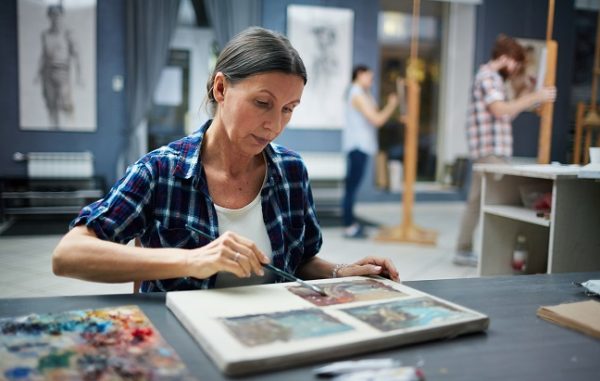
That’s when I stumbled across a paint-by-number kit. It was supposed to be a mountain scene, I think. But I ignored the numbers completely. Instead, I let my instincts guide me. Blue here. A little violet there. I had no plan. Just a brush, some paint, and a desperate need to feel something besides sorrow.
Something about it helped.
I wasn’t making anything extraordinary. No masterpieces. Just little pockets of peace. For those few minutes, I wasn’t the woman who lost her partner. I wasn’t lost at all. I was just a person painting.
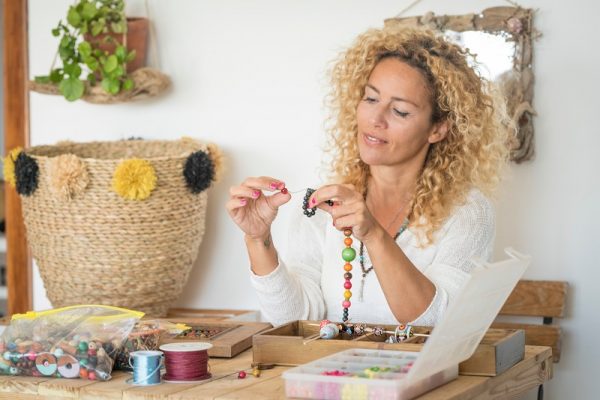
Soon I was writing again, too. I had always loved words, but they had gone silent for a while. When they came back, they came in bursts—half-thoughts scribbled into notebooks, grief journals hidden in drawers, letters to Richard I never sent.
I didn’t know it then, but I was creating my own kind of therapy. No license required. Just survival instincts and a brush.
What Creativity Means Now
Sixteen years have passed, and I still paint.
Not every day. Not with the same urgency I had in those early years. But painting—and writing—have become part of my emotional language. They help me process things I can’t always say out loud. They have helped me make sense of the pain but also helped me recognize the beauty that still exists alongside it.
Art gave me a place to put the sorrow. Not to erase it—but to shape it. To make something out of the ache. And over time, it helped me remember Richard without breaking. I still miss him, of course. I always will. But when I am painting, especially when I trust my intuition the way I did in those early kits, I feel closest to myself—and, in some quiet way, closest to him.
It’s strange how something so simple can shift everything.
I never set out to “heal” through creativity. I just needed something to do with my hands while my heart was hurting. But now, all these years later, I can look back and see the thread—how each little act of creativity pulled me forward, even when I thought I wasn’t moving at all.
Sixteen Years Later
If you’re in the early days of grief, I want you to know something:
You don’t have to know how to move forward. You don’t need a five-year plan or even a five-minute plan. You just need something—some small thing—that helps you get through today.
For me, it was paint. Not fancy, gallery-worthy paint. Just color on canvas. A brush in my hand when my mind couldn’t hold still. For you, it might be something else. A walk. A notebook. A garden. A song you hum on loop until the crying slows.
It doesn’t have to be big. It just has to be yours.
Sixteen years later, I still have days that surprise me. Days when the grief feels fresh again, like it just happened. But I also have days when I can smile at a memory instead of cry over it. Days when I can hold both love and loss at the same time.
That’s what creativity gave me. Not closure, but comfort. Not a fix, but a way forward.
And if you’re reading this, maybe that’s what you’re looking for too.
About the Author
Lori Snelling is an artist, writer, and former teacher who uses creativity as a way to process grief and life’s heavier moments. She believes art doesn’t have to be perfect to be healing—it just has to be honest. You can find her at www.loriscreativegatherings.com.