Disabilities
The Distance between Being Moved and Choosing Where to Go
by Massimo Lorusso
For years, people could move me without my being able to move myself. That difference taught me more about recovery than any slogan ever could.
I was 17 when, after a dive into the sea in Rimini, I sustained a cervical spinal cord injury. From that moment on, movement became something complicated. Before, I could decide to cross a room and simply do it. Afterwards, a decision as small as changing position or going from one place to another often required another person, a wheelchair, an accessible route, or all three.
In the early years I used a manual wheelchair. Because I could not propel it independently, someone else had to push me. I was still the person choosing where I wanted to go, at least in theory, but every choice had to pass through another person’s availability. If I wanted to move to another room, go outside, stop somewhere, or change direction, I needed somebody’s hands. That created a strange gap between intention and action.
This is one of the less visible parts of a major physical change. People naturally notice the loss of walking or the loss of hand function. They do not always notice what happens to ordinary spontaneity. When every movement requires coordination, even simple choices can begin to feel like requests. You become more aware of other people’s time. You learn to calculate whether something is worth asking for. Sometimes you wait, not because you have changed your mind, but because the help you need is not immediately available.
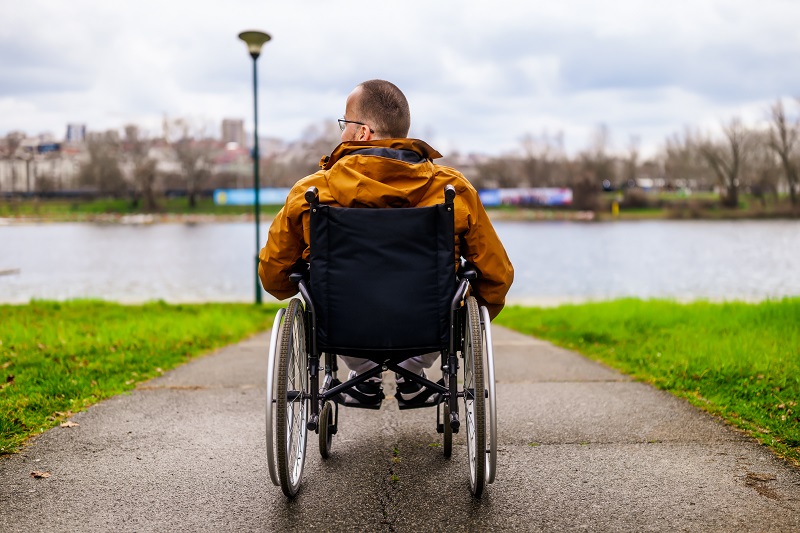
Later, the powered wheelchair changed that part of my life. It did not make me physically independent. I still needed extensive assistance in many areas. But it returned something very specific: the possibility of translating a decision into movement without asking someone to push me. I could choose a direction, stop, turn, approach someone, leave a conversation, or simply move a few metres because I wanted to.
The difference also changed social life. In a manual wheelchair, another person was not only helping me travel; that person was often physically present in every approach and every departure. A powered chair gave me a little more privacy inside public space. I could move closer to someone I wanted to speak with, create distance when I wanted a conversation to end, or position myself where I could participate rather than wait to be placed. None of this removed my need for assistance, but it reduced the number of moments in which another person had to translate my intentions into action.
That mattered psychologically as well. When you depend on help, gratitude is natural, but gratitude can quietly become hesitation. You may avoid asking for a small change because someone has already done so much. Regaining even one independent action interrupts that pattern. It reminds you that support should make participation possible, not make you feel like a burden for having preferences.
Those actions can sound almost trivial. They are not. Autonomy is often built from small moments that are easy to overlook until they disappear. Being able to decide where your body will be in the next minute changes the way you experience a room, a relationship, even your own thoughts. Movement becomes more than transport. It becomes a form of authorship.
That realization changed the way I understood recovery. For a long time, recovery is presented as a movement back toward what existed before: regaining function, restoring capacity, returning to normal. Those goals can be important, but after a permanent spinal cord injury there is another kind of work. You have to build a life that is not a copy of the previous one. You have to discover which parts of choice can be recovered even when physical function does not return.
For me, technology became part of that process. Over the years I have used different wheelchairs, hoists, an electric bed, pressure-relieving equipment, a shower stretcher and home-automation systems. Each device has a technical purpose, but the most important question is human: what choice does this give back, and what burden does it reduce? A useful device is not valuable because it looks advanced. It is valuable because it solves a real problem in a real life.
The same is true of assistance. I have never believed that autonomy means doing everything alone. That definition would exclude me immediately, because many physical actions in my day require another person. I have come to understand autonomy differently: I may need help to carry out an action, but the action should still belong to my life and my decision.
That distinction matters inside a family. When a person needs a great deal of physical help, love can slowly become mixed with duty, schedules and fatigue. The person who assists can be overloaded, and the person receiving help can begin to feel guilty for having needs. Good equipment and adequate professional support do not remove human relationships; they can protect them. They create space for a wife to remain a wife, for a family conversation not to become only a discussion about care, and for help to remain collaboration rather than control.
I have lived with tetraplegia for nearly four decades. My needs have changed with age, health and technology. What has remained constant is the importance of being asked, listened to and included in decisions. A wheelchair may carry my body, but it should carry me toward a destination I have chosen. A person may help me transfer, but should not assume that needing hands also means giving up judgment. A service may be designed to support me, but it becomes truly useful only when it fits the life I am trying to live.
I no longer measure recovery by how closely I resemble the 17-year-old I was before the dive. That young man belongs to my history, but recovery for me became something else: learning how to keep making meaningful choices inside a body that requires extensive support.
The distance between being moved and choosing where to go can be only a few metres. In a person’s life, however, it can be enormous. 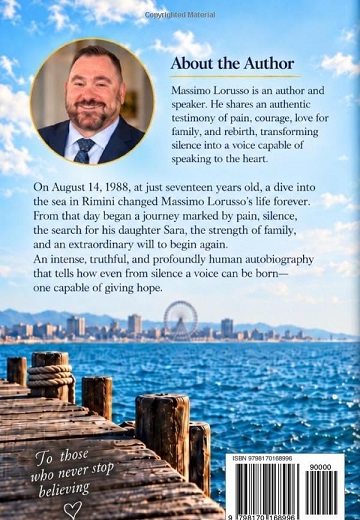
About the Author
Massimo Lorusso is an Italian author living in Milan. After a cervical spinal cord injury at age 17, he has spent nearly four decades navigating family life, fatherhood, personal assistance, mobility technology, healthcare, accessible travel and public services. He is the author of The Voice of Silence – What Words Do Not Say.