Spirituality
In Praise of the Pause
by Patrece Maluzynsky
How many times have you felt pressured—by others or yourself—to make a quick decision, only to later regret choosing unwisely? Being forced to come up with an answer to a question, a solution to a problem, or a plan to execute can be stressful. We’ve all been there.
Do any of these scenarios sound familiar: high-pressure sales tactics from someone at your front door selling solar panels; a friendship you’re considering ending because the relationship is one-sided; the secretary on your strata council who, days before the deadline, fills your inbox reminding you that yours is the only outstanding vote for an upcoming bylaw change? Such instances can cause mild annoyance at best, and health-ruining stress at worst.
As someone reluctant to ask for help, I tend to suffer decision-making in silence. I assume that whatever dilemma I’m facing is mine alone to contend with. After all, I’m a fifty-something—I should be capable of figuring this out! Yet when I recently heard others in my recovery community confess that they, too, dislike being pushed into making decisions before they’re ready, I knew I was in good company.
In the addiction recovery rooms where I still spend time, even decades after arresting the worst of my vices, clever slogans and acronyms fly freely. These gems have helped me through difficult times, both early in my recovery and even now that I’ve let go of my life-ruining addiction. Some of my favorite 12-Step slogans include: One Day at a Time, Progress, Not Perfection, and First Things First. Among the most commonly heard acronyms in recovery meetings are H.A.L.T. (avoiding relapse by noticing when we’re hungry, angry, lonely, or tired); G.O.D. (Good Orderly Direction—a way of thinking about a “Higher Power” in a non-religious way); and Q.T.I.P. (Quit Taking It Personally). At a recent meeting, I heard an acronym that was new to me—one that will surely come in handy the next time I feel forced to act quickly when I need more time to consider my options.
Many of us have heard of the concept of taking a sacred pause—giving ourselves the opportunity to stop and do nothing when the pressure to act feels overwhelming. But I was also pleased to discover that the individual letters of P.A.U.S.E. can stand for: Please Assist Until Serenity Enters. This powerful acronym reminds me that it’s wise, if not essential, to ask for help.
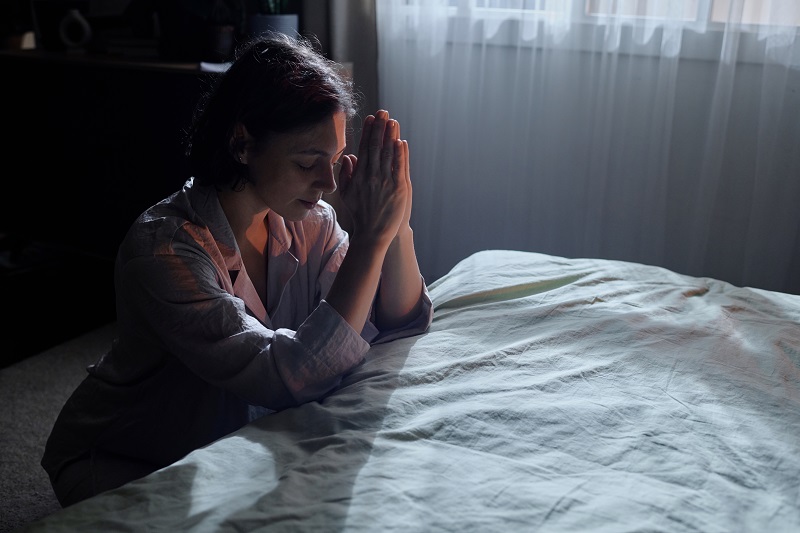
This help can come from a Higher Power of my choosing. For instance, perhaps I engage in two-way prayer, in which I ask this power for guidance, then sit in silence for a time, allowing a fresh thought or creative solution to arise. Help can also come from a wise friend, counselor, or therapist. Asking for help is never a weakness. Seeking guidance, in fact, may very well be an untapped superpower.
Assistance can come from multiple sources, and once we give ourselves permission to let others into our private perplexities, everything can change for the better. None of us has to sweat it out alone; there is no shame in calling on someone with more—or different—resources.
The second part of the P.A.U.S.E. acronym, “until serenity enters,” puts my racing, troubled mind at ease. After I ask a trusted source for help, I can trust that serenity will enter. This gives me hope. Burdens, when shared, can more easily be resolved. Dilemmas can be discussed until they lose their power to rob us of sanity and sleep. Thereafter, important decisions can be made with less trepidation.
There is a sweet kind of sacredness in pausing when we’re drowning in overwhelm. And there is peace in admitting that we don’t have all the answers.
The next time we feel pressured to act, we can give ourselves the gift of pausing. We can breathe deeply, hold up our hands, and say, “Please assist until serenity enters.” No longer do we have to sit alone in uncomfortable frustration and pain. We can keep summoning help, trusting that our inner peace will soon be restored.
About the Author
Patrece Maluzynsky is an adoptee and writer living in Alberta, Canada. She hopes to publish her recently completed memoir, A Surprising Peace: How One Adult Adoptee Transcended Her Anxiety and Addiction and Reconciled Her Grief. It’s a deeply honest account of how she faced her fears, overcame her addiction, and learned to love herself.