Author Interviews
Deborah K. Frontiera Talks about Her Biography of Douglass Houghton
Deborah K. Frontiera’s new book Douglass Houghton: Michigan’s Pioneer Geologist, Doctor, and Teacher is the first title of 2026 published by Modern History Press (MHP). Author Nikki Mitchell acknowledged the publication as:
“Deborah K Frontiera paints the life of Douglass Houghton in an engaging and masterful way, filling the pages with glimpses into what life would have looked like for one of Michigan’s greatest pioneers.”
RTS presents here a brief Q&A with Deborah K. Frontiera about this title.
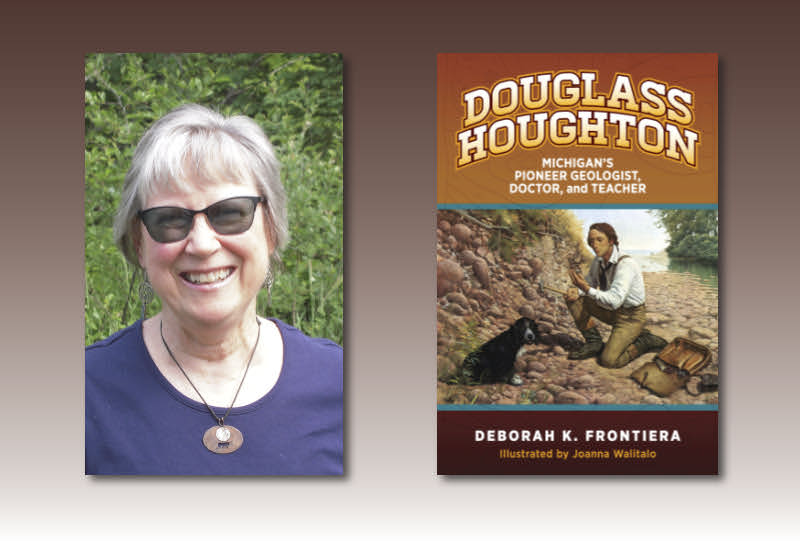
You grew up in Michigan’s Copper Country. How did your own connection to the region influence your portrayal of Douglass Houghton?
As a child, I hiked from Lake Linden through the woods to Douglass Houghton Falls many times. I’ve always loved my home area’s woods, streams and lake shores. When I was doing my early research and learned of Houghton’s connection to nature as a young person, I felt a definite connection.
What do you hope teachers and students in the U.P. will discover about their local history through Houghton’s story?
I hope they will begin to understand how rugged the area was and what life was like before roads, electricity, phones and internet.
Houghton’s surveys helped put the Copper Country on the map. How do you think his scientific spirit still lives on in our schools and communities today?
That spirit continues in STEM, STEAM, and robotic competitions and projects in elementary and secondary schools and colleges.
Your book includes classroom-ready activities. How might teachers use these to bring local history alive for students?
I hope the activities they choose help students connect not only to Douglass Houghton but to the pioneers of their own towns and counties. It might even stimulate a student’s desire to research their areas or even their grandparents and great grandparents’ lives.
If Douglass Houghton could visit the Copper Country today, what do you think would amaze him most about the land he once explored?
I think he would be amazed at the Soo Locks, superhighways, lake freighters, modern communications, speed of travel, and conveniences. As a lover of the natural world, he might be upset by the early destruction of the environment. Also, the fact that stamp sand deposits from 100+ years of copper mine tailings dumped in Portage and Torch lakes and Lake Superior became EPA “Superfund” sites due toxic levels of copper leaching. I think he would have hoped for more responsible development of the resources he recorded.
. Author Nikki Mitchell acknowledged the publication as: “Deborah K Frontiera paints the life of Douglass Houghton in an engaging and masterful way, filling the pages with glimpses into what life […])