Anxiety and Depression
Why Families Are Choosing Virtual IOP Programs for Teen Mental Health
by Emmanuel Oghenemaga
When you realize your teenager needs more help than a weekly therapy session can provide, the first feeling is usually relief, finally, a plan. The second feeling is often panic. How are you supposed to pull them out of school for three hours a day, three times a week? How do you manage the driving, the missed classes, and the inevitable questions from teachers?
For a long time, getting higher-level care meant disrupting the entire family schedule. But that’s changing. Virtual Intensive Outpatient Programs (IOPs) are becoming a lifeline for families who need expert care but can’t put life on hold to get it, meeting teens where they already live: online.
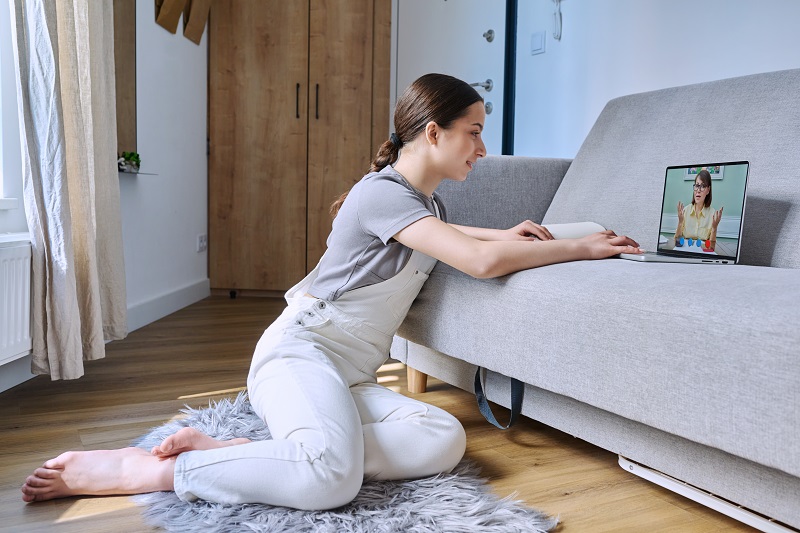
What is a virtual intensive outpatient program?
It sounds technical, but a virtual IOP is a structured therapy program that can be tailored to teens struggling with severe anxiety, depression, or behavioral issues. These challenges require more support than weekly therapy but don’t need hospitalization, making it adaptable to your teen’s unique needs.
The difference between IOP and standard weekly therapy
Think of weekly therapy like a maintenance check-up. It’s great for keeping things on track. An IOP is more like a renovation. It’s intensive. Instead of one hour a week, your teen might be in therapy for nine or ten hours a week.
This usually involves a mix of group therapy (with other teens), individual counseling, and family sessions. The goal is to provide a high level of support to stabilize a crisis or teach new coping skills quickly.
How a typical virtual program schedule works
Most virtual programs run after school, usually in the late afternoon or early evening. A typical session might look like this:
- Check-in: The group meets online to discuss their day and current mood.
- Skill-building: A therapist leads a session on a specific topic, like managing anger or dealing with social pressure.
- Process group: Teens share what they’re going through and support each other.
- Wrap-up: Setting goals for the next day.
It’s structured, but because it’s virtual, your teen can log in from their bedroom, the kitchen table, or even a quiet space at school if needed.
The technology needed for a successful experience
You don’t need a high-tech setup. A reliable internet connection and a laptop or tablet with a working camera are usually enough. Most programs use secure, HIPAA-compliant platforms (like a medical version of Zoom) to ensure privacy. The most important piece of “tech” is actually a pair of headphones, essential for creating a private space where your teen feels safe to talk.
Solving the daily schedule struggle
Let’s be honest: the logistics of mental health care can be a nightmare. Driving across town in rush hour traffic to get to a 4 PM appointment is a recipe for stress.
Removing the stress of the daily commute
Virtual programs give you back that travel time. There’s no rushing to leave work early, no fighting traffic, and no sitting in a waiting room for three hours. Your teen finishes their school day, has a snack, and logs in. It lowers the barrier to entry, making it much more likely that the family can actually stick with the treatment plan.
Balancing mental health treatment with schoolwork
One of the biggest fears parents have is that treatment will cause their child to fall behind in school. Because virtual IOPs typically run in the evenings, the academic day is protected. Your teen stays in class, stays connected to their friends, and gets the help they need after the final bell rings.
Accessing expert care regardless of location
If you live in a rural area or a smaller town, finding a specialized teen therapist can be impossible. Virtual programs erase those geographic lines. You can access top-tier specialists and virtual iop programs regardless of your zip code. It opens doors that were once closed.
The unique benefits of healing at home
There’s a common misconception that virtual care is “less than” in-person care. But for many teens, healing at home actually offers distinct advantages.
Learning to cope with real-world triggers
When a teen goes to a residential facility, they are in a bubble. It’s safe, but it’s not real life. Healing at home means they are learning to cope with their triggers; stressful homework, sibling arguments, social media drama, in real-time. They learn a skill in therapy at 5 PM and apply it at the dinner table at 6 PM. That real-world practice is powerful.
Reducing social anxiety and fear of stigma
Walking into a mental health clinic can be terrifying for a teenager. They worry about who might see them. Logging in from home removes that layer of anxiety. The “screen barrier” can actually help some teens open up faster; they feel safer in their own space, surrounded by their own things (and maybe even the family dog).
Getting the whole family involved in recovery
Recovery is a team sport. When treatment happens at home, it’s harder for parents to check out. You aren’t just dropping them off; you are part of the process. Virtual programs often include family therapy sessions that you can join from work or home, making it easier to learn how to support your child effectively.
Is virtual treatment as effective as in-person?
This is the big question. Does it actually work?
What recent research says about telehealth outcomes
It’s easy to think that therapy only “counts” if you’re sitting on a couch across from someone. But the data paints a different picture. When it comes to anxiety and depression, telehealth matches the results of traditional in-person care. The connection matters more than the zip code.
Building genuine connections through a screen
Teens are “digital natives.” They naturally build friendships, date, and socialize online. For them, connecting through a screen doesn’t feel distant; it feels normal. Skilled therapists know how to use the platform to build rapport, using chat functions, screen sharing, and interactive tools to keep teens engaged.
Handling safety and crises remotely
This is the big worry. What happens if things go wrong? Reputable programs don’t just hope for the best. They have real plans in place. If a teen is in trouble, the therapist calls local emergency services immediately. They don’t just watch from a screen; they intervene. It works the same way it would if they were in an office.
Deciding if virtual IOP is right for your teen
Virtual care isn’t a magic wand, and it’s not right for everyone. It’s a tool, and like any tool, it works best in the right situations. Research suggests that tailoring treatment modality to a teen’s unique needs is essential for optimizing recovery.
Signs that virtual care is a good fit
- Tech-comfort: Your teen is comfortable using video calls and has a private space to talk.
- Motivation: They are somewhat willing to participate (even if they aren’t thrilled).
- Safety: They are not currently a danger to themselves or others.
- Support: You have a stable home environment that allows them to focus on recovery.
When in-person support might be necessary
If your teen is struggling with active suicidal thoughts, self-harm, or severe substance use that requires medical monitoring, in-person care is likely the safer choice. Virtual care relies on a certain level of stability. If things are volatile, having a physical team present is crucial.
Ultimately, the best program is the one your teen will actually attend and engage with. For many families, the flexibility and comfort of a virtual IOP make that “yes” a whole lot easier to get.
About the Author
This post was contributed by Emmanuel Oghenemaga, a mental health content strategist who specializes in translating complex clinical psychology into practical guidance for people navigating anxiety, trauma, and treatment challenges. His work focuses on helping readers understand their conditions well enough to take meaningful action toward recovery.
Sources
- Greenwood, H., et al. (2022). Telehealth Versus Face-to-face Psychotherapy for Less Common Mental Health Conditions: Systematic Review and Meta-analysis of Randomized Controlled Trials. JMIR Mental Health. https://doi.org/10.2196/31780
- Krzyżaniak, N., et al. (2021). The effectiveness of telehealth versus face-to face interventions for anxiety disorders: A systematic review and meta-analysis. Journal of Telemedicine and Telecare. https://doi.org/10.1177/1357633×211053738
- Odgers, C., & Jensen, M. (2020). Adolescent mental health in the digital age: facts, fears, and future directions. Journal of Child Psychology and Psychiatry. https://doi.org/10.1111/jcpp.13190
- Serón, P., et al. (2021). Effectiveness of Telerehabilitation in Physical Therapy: A Rapid Overview. Physical Therapy. https://doi.org/10.1093/ptj/pzab053