Abuse Recovery
The Value of Connection in Recovery
by Burk Jackson
There is a quote I keep coming back to, one that gets passed around in recovery circles enough that it’s almost become wallpaper: “The opposite of addiction is not sobriety. It is connection.”
Johann Hari said it. And like most true things, it sounds simple until you sit with it long enough to feel the weight of what it’s actually saying.
It’s not saying sobriety doesn’t matter. It’s saying sobriety alone isn’t the thing. The thing—the actual force underneath recovery, the reason some people make it and some people don’t—is whether or not they find their way back to other human beings.
I’ve been in recovery since October 20, 1994. Thirty-one years. And I can tell you that sobriety gave me my life back, but connection is what gave me a reason to live it.
Those aren’t the same thing.
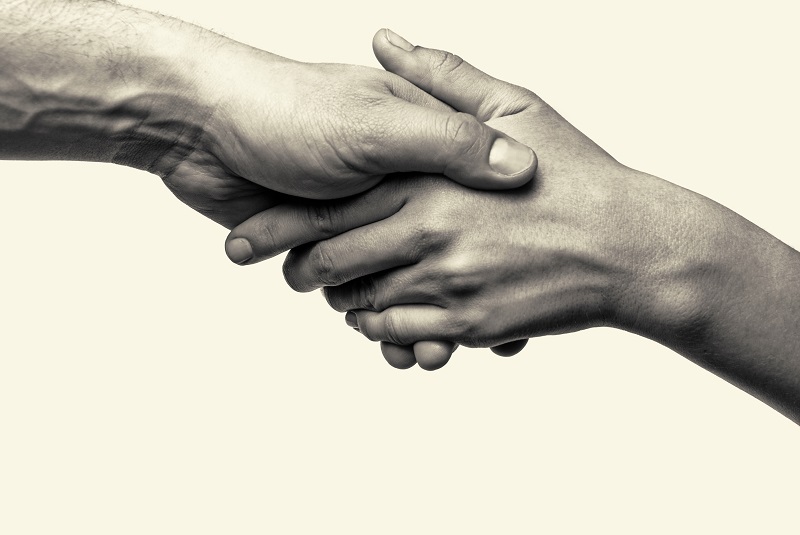
Addiction is, at its core, a story about disconnection. Not just from other people—though it does that methodically, burning bridges in an order that almost seems deliberate — but from yourself. From your own feelings, your own history, your own sense of what’s real and what matters. The substance becomes the intermediary for everything. It mediates your relationship with joy. With grief. With boredom. With other people. With time itself.
And so when the substance goes, you are left with something that looks like a life but feels hollow. The scaffolding is there. But the thing that was supposed to live inside it—the felt sense of belonging somewhere, to someone, to yourself—that takes time to come back. For some people, it never fully does.
That’s what nobody tells you in early recovery. They tell you about the tools. The steps, the meetings, the sponsors, the literature, the daily practice of putting one foot in front of the other. All of that is real and necessary. But the tools don’t work in a vacuum. They work because they are practiced in community, in relationship, in the presence of other people who have walked the same road and survived it.
The tools are the container. Connection is what you put in it.
This isn’t a new idea. It’s actually the oldest idea in modern recovery. Bill Wilson had been in and out of treatment four times before he called Dr. Bob Smith—not to pitch a program, not to offer a solution, but because he was struggling and needed to talk to another alcoholic. Dr. Bob had tried everything available to him and couldn’t stay sober. Then two men sat across from each other in a kitchen in Akron, Ohio, and something happened that no treatment had been able to produce. Not because they had answers for each other. Because they had understanding. That conversation in 1935 became the foundation of Alcoholics Anonymous—but the real foundation wasn’t the twelve steps. It was two human beings connecting over a shared experience neither of them could explain to anyone who hadn’t lived it.
We sometimes forget that. We build the structure and mistake it for the thing itself.
And here’s what thirty-one years has taught me: connection doesn’t happen on a schedule. It doesn’t wait for a meeting to start or end. It happens in parking lots after the meeting closes, in phone calls at inconvenient hours, in a text message that just says I’m thinking about you. It happens between strangers who recognize something in each other before a word is spoken. It happens at kitchen tables, in coffee shops, on a park bench, in the comment section of a recovery post at midnight. The formal structures of recovery create the conditions for connection—but the connection itself is wild. It shows up where it shows up.

I want to try to describe what connection in recovery actually feels like, because I think it gets idealized in a way that makes it sound softer than it is.
It isn’t warmth, exactly. It isn’t just being around people who understand. It’s something more specific than that—a kind of recognition that happens when you’re in the presence of someone who has been in the same darkness you’ve been in and came out the other side. Not someone who read about it. Not someone who studied it. Someone who lived it.
When that person looks at you, something in you relaxes that you didn’t know was braced. You stop performing. You stop translating. You don’t have to explain the particular shape of your shame, or why 2 in the morning has always been harder than midnight, or what it felt like to want to get better and not be able to. They already know. And in that knowing, something shifts.
That shift—that particular relaxation—is not a small thing. It is, I believe, where recovery actually happens. Not in the moment of surrender, not at the milestone anniversary, but in the ordinary accumulation of moments where another person sees you clearly and doesn’t flinch.
There’s something else about connection in recovery that took me years to fully understand: it doesn’t flow in only one direction.
The person who shows up for someone else in their hardest moment—who takes a call at the wrong hour, who sits with someone in the gap between where they are and where the next meeting starts—that person is not just giving something. They are receiving something too. Something that can’t be found anywhere else.
When you take the wreckage of your own history and offer it as a resource to someone still in the middle of theirs, something closes. Some loop that stayed open for years. There is a kind of meaning that only becomes available when your suffering is put to use—not erased, not explained away, but converted into something that helps someone else find the door.
I’ve heard people in long-term recovery describe this as the best thing they’ve ever done. Not their careers, not their relationships, not their milestones. The moment they became useful to someone who was where they used to be.
That’s not coincidence. That’s the mechanism.

Thirty-one years in, I still think about this. I built RecoveryBridge—a platform that connects people in vulnerable moments with peers who have real lived experience—because I watched too many people navigate the space between formal support and genuine human connection alone. Not in crisis. Not in need of a hotline. Just in the ordinary, unnamed hours when the tools feel out of reach and the silence gets loud.
What I’ve learned is that the infrastructure of recovery—the meetings, the programs, the clinical support—is essential. But it was never designed to fill every hour. And the hours it doesn’t fill are the ones that matter most.
Connection fills them. Not perfectly. Not always. But in the specific, irreplaceable way that only comes from one human being saying to another: I’ve been here. I know what this is. You’re not alone in it.
That’s not a nice idea. It’s not a supplement to recovery.
It is recovery.
About the Author
Burk Jackson is the founder of RecoveryBridge, a platform connecting people in recovery with peers who have lived experience for free, confidential one-on-one conversations. He has been in recovery since October 20, 1994.